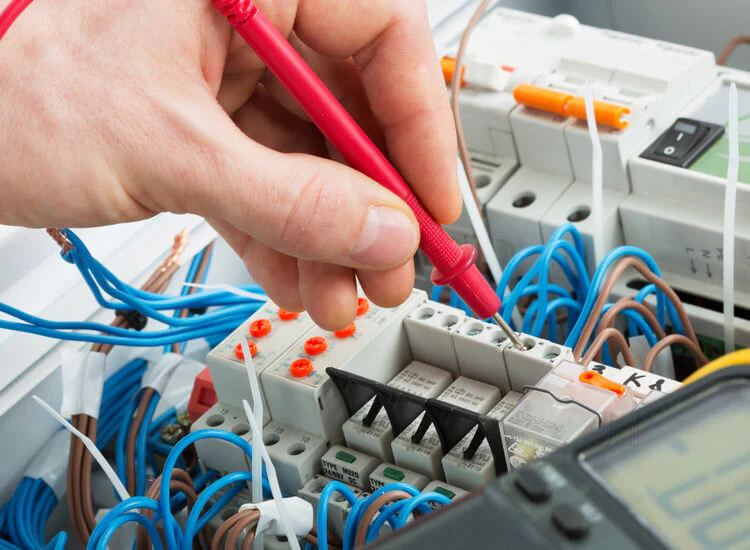
Walk into almost any busy business and there’s a good chance nobody is thinking about electricity. Employees are answering emails, customers are browsing products, machines are running, phones are charging and someone is probably standing near the coffee machine waiting for it to finish.
Electricity is simply expected to work.
That changes very quickly when it doesn’t.
A tripped circuit can shut down a workstation. Poor lighting can make a retail space uncomfortable. An electrical fault can damage expensive equipment or, in the worst circumstances, create a serious safety hazard. For businesses, electrical infrastructure isn’t just another building feature. It quietly supports almost everything that happens during the working day.
Your Business Depends on More Than a Few Outlets
A small office may appear electrically simple, but add computers, printers, monitors, networking equipment, kitchen appliances, air conditioning and charging stations, and the demand starts to climb.
Larger businesses have even more going on. Commercial kitchens rely heavily on electrical equipment. Workshops may use high-powered machinery. Retail stores need lighting, refrigeration, point-of-sale systems and security equipment.
This is why professional business electrical services can be so important. Commercial environments often have different requirements from ordinary residential properties, and electrical work needs to account for the way a business actually operates.
The right approach isn’t simply adding more outlets whenever employees start using extension leads. It’s understanding the building’s electrical capacity and designing systems around real operational needs.
Electrical Problems Cost More Than Repair Bills
One of the biggest mistakes business owners make is looking at electrical maintenance purely as an expense.
Consider what happens when a crucial circuit fails.
Employees may be unable to work. Customers may leave. Orders could be delayed. Refrigerated stock might be affected. A business could even have to close temporarily.
Suddenly, the cost isn’t just an electrician’s invoice.
Regular inspections and preventive maintenance can help identify worn components, overloaded circuits, damaged wiring and other problems before they become major disruptions. No maintenance plan can guarantee that nothing will ever go wrong, of course, but it can reduce avoidable surprises.
And businesses tend to appreciate fewer surprises.
Lighting Can Influence the Working Environment
Lighting is another area that’s easy to underestimate.
In an office, poor lighting can make computer work uncomfortable. In a retail store, badly positioned fixtures may make products look less appealing. In a warehouse, dark areas can make movement and handling tasks more difficult.
Good commercial lighting should be practical first, but it can also contribute to the atmosphere of a space.
Modern LED fixtures are widely used because they can provide efficient illumination and come in a range of colour temperatures and designs. Motion sensors, timers and automated controls can also help businesses avoid leaving lights running unnecessarily.
The best lighting plan depends on the environment. A restaurant, dental clinic, warehouse and clothing store shouldn’t all be lit in exactly the same way.
Every Business Has Different Electrical Needs
A bakery has very different electrical demands from an accounting office. A workshop isn’t going to have the same requirements as a boutique hotel.
That sounds obvious, yet generic installations are sometimes treated as though one approach should fit every business.
In reality, tailored electrical solutions can make more sense because they take the property’s layout, equipment, working hours and future plans into account.
For example, a business expecting to install additional machinery may need to plan for increased electrical capacity today rather than discovering six months later that the existing setup can’t comfortably handle the load.
Likewise, an office planning a major expansion should think about outlets, data infrastructure, lighting and equipment locations before the new desks arrive.
A little foresight can save a lot of disruption.
Don’t Forget Emergency Power
Power interruptions aren’t always predictable. Storms, utility problems, equipment failures and local infrastructure issues can interrupt supply without much warning.
Depending on the business, backup power may be worth considering.
Uninterruptible power supplies can protect sensitive electronics and provide short-term power during interruptions. Generators or battery-based systems may be appropriate for businesses where longer outages could cause significant operational problems.
The important thing is to identify what actually needs backup power.
A small office might primarily need its networking equipment and computers protected. A medical or industrial facility could have much more critical requirements.
There isn’t one universal answer, which is why a professional assessment is useful.
Electrical Safety Deserves Serious Attention
Employees shouldn’t have to wonder whether a buzzing outlet is normal or whether a warm plug is something to worry about.
Warning signs such as burning smells, flickering lights, repeated breaker trips, damaged cables or unusual sounds should be investigated rather than ignored.
Electrical panels should also be accessible and properly maintained. Cables shouldn’t be left where they can become trip hazards, and temporary extension cords shouldn’t quietly become permanent wiring solutions.
Training employees to report electrical problems can help too. They don’t need to understand electrical engineering. They simply need to know that unusual heat, sparks, smoke or repeated power interruptions shouldn’t be brushed aside.
Technology Is Changing Commercial Electrical Requirements
Modern businesses use more technology than ever.
From cloud-connected computers to security cameras, access-control systems, smart lighting and electric vehicle charging points, electrical infrastructure is increasingly connected to digital operations.
This creates opportunities, but it also means businesses need to think ahead.
If you’re renovating or moving into a new commercial property, consider how technology might change over the next few years. Installing adequate capacity and strategically positioned outlets now can make future upgrades much easier.
For growing businesses, customized solutions can also help avoid the frustrating cycle of constantly adapting an old installation to new equipment.
It’s rarely possible to predict every future requirement, but flexible planning is better than ignoring the future altogether.
Choosing an Electrical Contractor
Price matters. Business owners have budgets to manage, after all. But choosing an electrical contractor solely because they submitted the lowest quote can be risky.
Look for properly qualified professionals with experience relevant to your type of property. Ask whether the work will comply with applicable electrical codes and regulations. Make sure the scope of work is clearly explained before anything begins.
Good communication matters more than people sometimes realise. An electrician should be able to explain what needs doing, why it matters and what disruption the business should expect.
For larger projects, documentation and scheduling become especially important. Electrical work needs to fit around business operations wherever possible.
Think About Maintenance Before Something Breaks
Waiting for a failure is rarely the ideal maintenance strategy.
A sensible maintenance schedule can include inspections, testing, cleaning of appropriate equipment, checking connections and reviewing changes to electrical loads.
Businesses also change over time. New equipment gets purchased, office layouts shift and additional employees arrive. An electrical system that was perfectly adequate five years ago may need reassessment today.
That doesn’t necessarily mean replacing everything. Sometimes a few targeted improvements are enough.
Reliable Electricity Is Part of Good Business
Electricity may not be the most visible part of a business, but it affects nearly every visible part.
The lights customers see, the computers employees use, the machinery producing goods, the security systems protecting the building—all depend on it.
Investing in properly planned electrical infrastructure isn’t about making a business look impressive. It’s about keeping people safe, reducing avoidable downtime and creating a workplace that can function without constant electrical headaches.
The smartest electrical work is often the work nobody notices.
When everything runs quietly in the background, that’s usually a sign the system is doing exactly what it should.